
When Silence Speaks Louder Than Statements: Mustafizur Rahman and the Cost of Cricket Caught in Between
Mustafizur Rahman’s reaction to his exclusion from Kolkata Knight Riders was brief, almost resigned. But the restraint in his words is precisely what makes this episode more revealing than the outrage that followed it. In modern cricket, moments like these are rarely just about selection.
They are about what happens when a player’s professional trajectory becomes collateral in forces far beyond performance, form, or skill.
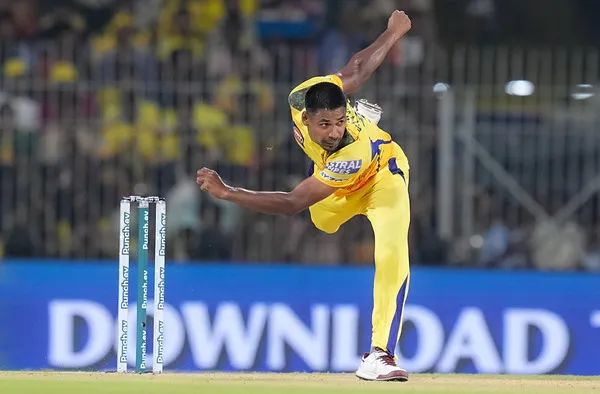
Placed within the wider cricketing landscape, this situation reflects how fragile the assumed separation between sport and geopolitics has become.
Franchise leagues such as the Indian Premier League are often portrayed as neutral, commercial spaces where nationality fades behind contracts and roles. In reality, they operate within national ecosystems, and when political pressure rises, that neutrality can disappear quickly.
Mustafizur’s release from Kolkata Knight Riders exposes how swiftly external sentiment can override cricketing logic.
For the player himself, the episode highlights a familiar but uncomfortable truth. Elite fast bowlers rely on exposure to high-pressure, high-quality environments to stay relevant in the shortest format.
The IPL offers exactly that: repeated confrontations with top-order power, death-over scenarios under scrutiny, and tactical experimentation that feeds directly into international readiness.
Being removed from that ecosystem is not just a missed paycheque or a bruised ego; it interrupts a developmental loop that players like Mustafizur depend on to remain effective across formats.
The psychological dimension is just as significant. Mustafizur’s public response carried no defiance, only acceptance. That tone suggests an awareness that resistance is futile when decisions are shaped elsewhere. For players from smaller boards, this resignation is not uncommon.
They operate with the knowledge that their agency is limited, and that geopolitical shifts can undo months of planning without warning. Over time, this breeds a form of professional uncertainty that numbers and contracts cannot measure but performance often reflects.
From a franchise perspective, the situation underlines the tension between squad-building strategy and external risk management.
KKR’s original investment in Mustafizur was a cricketing one: variation, experience, and control in phases where T20 matches are usually won or lost. Being forced to seek a replacement so close to a tournament cycle is not simply inconvenient; it disrupts balance, planning, and role clarity. Teams can find alternatives, but like-for-like replacements in T20 cricket are rare, especially when time compresses decision-making.
The broader implications ripple outward toward international preparation. Bangladesh’s subsequent posture questioning travel, seeking venue adjustments, and reassessing bilateral commitments suggests that the Mustafizur episode is being interpreted not as an isolated incident but as a signal.
When boards perceive that their players are vulnerable abroad, institutional reflexes lean toward protection rather than exposure. That instinct is understandable, but it carries long-term costs, particularly in tournaments where adaptability and experience under hostile conditions often separate contenders from participants.
Why this matters now is tied to timing. With major global events approaching and scheduling windows narrowing, disruptions compound quickly.
Players lose rhythm, teams lose continuity, and boards lose flexibility. In such moments, decisions made to assert principle can quietly reshape competitive readiness, often in ways that only become visible when pressure peaks on the field.
In the end, Mustafizur Rahman’s situation is less about one quote or one franchise call. It is about how modern cricket increasingly places players at the intersection of sport, sentiment, and state.
When those forces collide, silence from the player can say more than protest ever could signalling not indifference, but an understanding of how little control remains once the game is no longer just a game.

Rivcky John
A prominent figure in sports journalism for the last two decades. Cricket Analyst & Writing News, Features, Match Previews/Reviews/Reports, And Opinion Pieces on Cricket. You can connect with him on Facebook also.