
When the IPL Draws Lines: Mustafizur Rahman and a Pattern Bigger Than One Player
Mustafizur Rahman’s absence from the upcoming Indian Premier League season has been framed largely as a consequence of a specific geopolitical moment. Yet, when viewed in a longer historical arc, his case looks far less exceptional.
The IPL has repeatedly shown that it does not exist in isolation from politics, law, or public sentiment. What changes from case to case is not the principle, but the trigger.
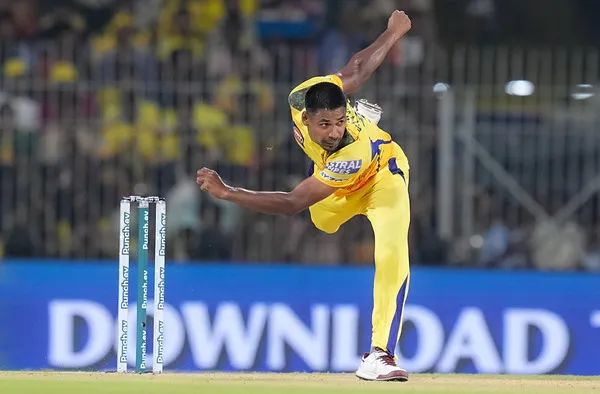
Seen within the broader evolution of the IPL, the league has always operated at the intersection of sport and sovereignty. While it markets itself as a global, franchise-driven competition, its boundaries are ultimately defined by Indian law, domestic politics, and diplomatic realities. Mustafizur’s exclusion fits neatly into this framework.
It is not about his bowling, value at the auction, or tactical fit for Kolkata Knight Riders; it is about the league responding to forces it cannot or will not ignore.
History offers clear precedents. The complete disappearance of Pakistani players after 2009 was not a cricketing decision, but a geopolitical one. Players who had already been part of the league were quietly erased from its ecosystem, not because of form or conduct, but because bilateral relations made their presence untenable.
Over time, that absence became normalized, to the point where a generation of IPL viewers has grown up without ever seeing Pakistani cricketers in the tournament. What began as an extraordinary response slowly hardened into an accepted reality.
Bangladesh Bans IPL Broadcast Bangladesh I&B Ministry
The same dynamic surfaced in a different form in 2013, when Sri Lankan players were barred from playing IPL matches in Chennai. In that instance, public sentiment and regional politics dictated on-field availability.
Muttiah Muralitharan, one of the most respected figures in world cricket, found himself sidelined not due to controversy of his own making, but because he symbolized a larger political grievance. The episode underscored a recurring truth: individual players often become proxies for disputes they neither control nor influence.
Not all exclusions have stemmed from geopolitics. The case of Luke Pomersbach illustrates another boundary the IPL enforces legal and reputational risk.
His suspension in 2012 was swift and decisive, driven by criminal allegations rather than international relations. While fundamentally different in nature, it reinforces the same principle: the league prioritizes institutional protection over individual circumstance when external risk enters the frame.
What links these episodes to Mustafizur Rahman’s situation is not moral equivalence, but structural consistency.
The IPL has repeatedly demonstrated that it will act preemptively when controversy threatens stability, whether that controversy arises from diplomacy, domestic politics, or legal trouble. In Mustafizur’s case, rising tensions between India and Bangladesh have created an environment where caution outweighs cricketing logic.
For players, especially those from smaller or politically sensitive cricketing nations, this creates an underlying vulnerability.
Participation in global leagues is never guaranteed by performance alone. External events often far removed from the boundary rope can abruptly close doors. Over time, this reality shapes career planning, mental resilience, and even the perceived value of franchise contracts.
Why this matters now is not simply because Mustafizur will miss another IPL season. It matters because the league’s history suggests that once such exclusions occur, they can linger far beyond their original context. Temporary measures have a habit of becoming permanent absences.
For the IPL, these decisions may preserve short-term stability. For the global cricket ecosystem, they quietly redraw the map of who gets access to the game’s most influential stage.
Taken together, these episodes reveal that Mustafizur Rahman is not an outlier, but part of a longer pattern. The IPL has always reflected the realities surrounding it, even when those realities sit uncomfortably with the idea of sport as a neutral space.
As long as cricket remains intertwined with national identity and political power, such moments will recur less as surprises, and more as reminders of where the league’s ultimate lines are drawn.

Rivcky John
A prominent figure in sports journalism for the last two decades. Cricket Analyst & Writing News, Features, Match Previews/Reviews/Reports, And Opinion Pieces on Cricket. You can connect with him on Facebook also.